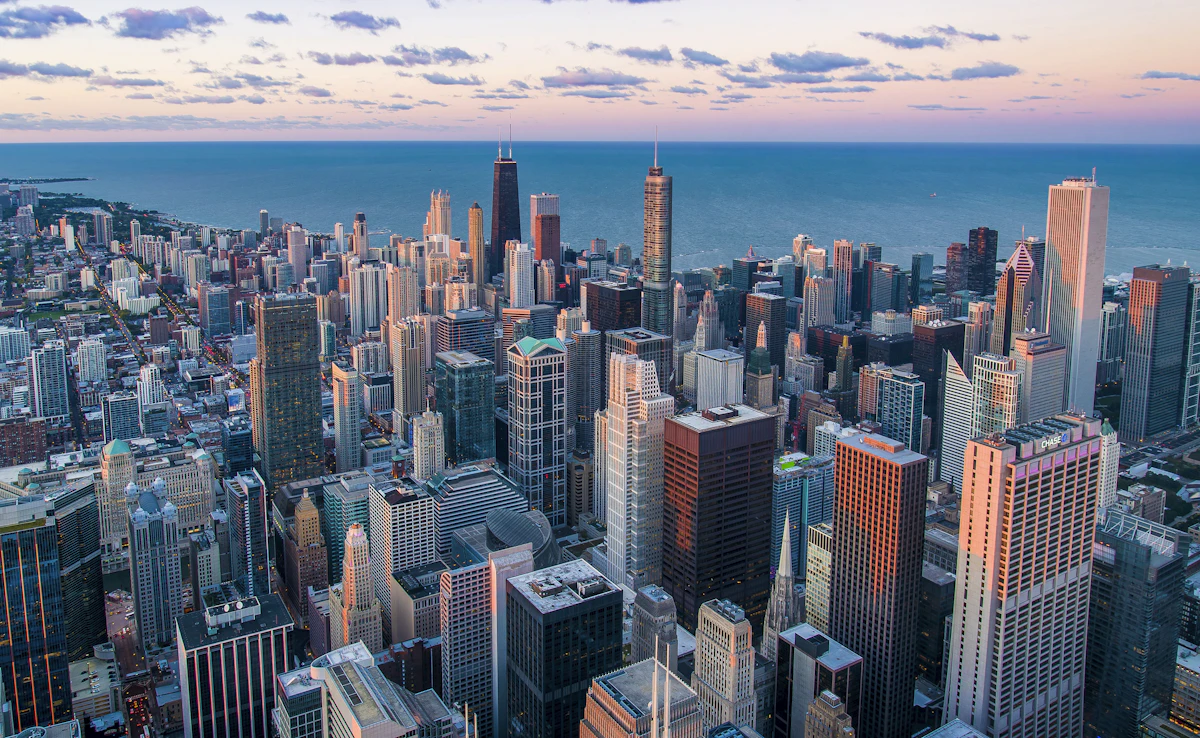
A city skyline changes completely in the hour before sunset. Harsh midday light flattens buildings into grey shapes, while golden hour light warms their faces, lengthens shadows, and separates towers that looked identical at noon. The best skyline photos are usually planned in daylight and taken in that short warm window, which rewards photographers who arrive early and stay a little after sunset.
Scout the viewpoint before golden hour
Visit the viewpoint in daylight first, or study maps and photos, to learn where the sun will set relative to the skyline, where the foreground is, and whether a river, bridge, or park gives depth. A viewpoint across water is often ideal, because the water reflects warm light and doubles the skyline. Check whether tripods are allowed, whether the spot is safe after dark, and how long the walk back takes. Arriving at least forty-five minutes before sunset gives you time to test compositions and to photograph the softer light that precedes the golden peak.
Work with warm light, not against it
Golden hour light is directional, so buildings facing the sun glow warm while buildings facing away fall into cool shadow. That contrast is the subject, not a problem to remove. Expose for the sunlit faces to keep their colour, and let shadows fall dark, rather than lifting everything to an even grey. Include a foreground element, such as a railing, a tree, or a boat, to give scale, and try both wide frames that show the whole skyline and tighter frames that isolate two or three towers. Stay after sunset for blue hour, when building lights switch on and the sky turns deep blue, which suits a second set of photos from the same spot. related guide covers finding reflections and colour in city streets, which pairs well with skyline work.
Keep the skyline sharp and level
A tripod helps at golden hour, because light fades quickly and shutter speeds lengthen, but a wall, railing, or bag can steady the camera if a tripod is not allowed. Keep horizons level, because a tilted skyline is immediately noticeable, and check the edges of the frame for cranes, antennas, or half-cut buildings that distract from the main towers. Take the same composition at several moments as the light changes, and compare them later; the best frame is often not the first, but the one taken when the light and the building lights balance. another guide in this category applies the same patience to forest light, where a single bright area gives the photo its focus.
Note the viewpoint, the sun direction, and the time of the best light for each skyline you photograph. Cities look different in each season, and a short note turns a good viewpoint into one you can return to with confidence.