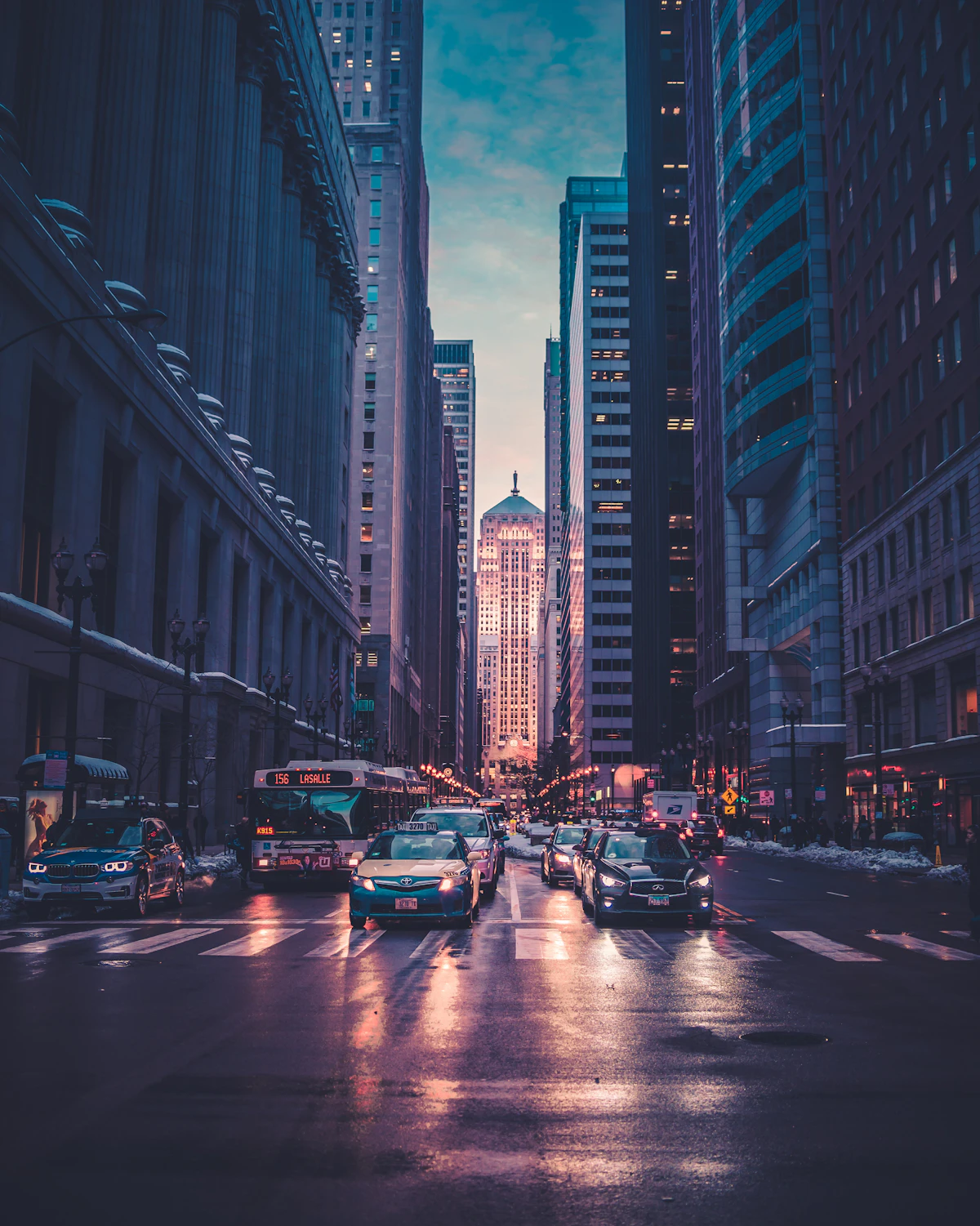
Rain is often treated as a reason to stay indoors, but for city photography it can be an advantage. Wet pavement, puddles, and shop windows turn ordinary streets into reflective surfaces, and the colours of signs and traffic lights become stronger against dark, damp surfaces. The trick is to shoot in a break in the rain, not in the heaviest downpour.
Find reflections at eye level
Puddles are the easiest reflections to use, because they mirror buildings and signs without needing special equipment. Crouch low so the reflection fills more of the frame, and place the horizon high or low depending on whether the reflection or the real building matters more. Wet pavements also reflect colour even without a clear puddle, especially at night when street lights and shop signs are on. Look for a single strong colour, such as a red sign or a yellow taxi, and let the reflection repeat it.
Protect your gear and yourself
A simple rain cover, a plastic bag with a hole for the lens, or even an umbrella held by a companion can keep a camera usable in light rain. Wipe the lens often, because a single drop can soften the whole photo. Wear shoes with grip, watch for traffic when you are looking down at puddles, and avoid standing in cycle lanes or crossings while composing. Keep spare batteries warm in a pocket, because cold, wet weather drains them faster. related guide covers planning around tide and light at the coast.
Use people and scale sparingly
A single person with an umbrella can give a street scene scale and a story, but a crowded frame can dilute the reflection you found. Wait for a gap in foot traffic, or time the photo so one person walks through the reflection. Shoot both horizontal and vertical frames, because reflections often suit a vertical crop better. Review your photos on a larger screen later and notice which reflections stayed clear and which became muddy; that review will sharpen your eye for the next rainy walk. another guide in this category explains how soft sunrise light works in mountain landscapes.
After a rainy walk, back up your photos the same day and review them while the route is still fresh in your mind. Note which streets gave the clearest reflections, which colours worked best, and where you felt safe standing. That short review turns a single walk into a repeatable route, and it helps you plan the next rainy outing with a clear idea of where to start.